 Burnby
The Burnby cardio guide
Short, sourced answers about walking, cycling, the elliptical and other cardio: how much, how hard, when, what to drink, and what changes with age.
Guides
Cardio at Every Age: Benefits, Risks and When to See a Doctor
Cardio helps at every age, from teenagers to people over 60. What the WHO recommends for each age group, the real risks, and who should talk to a doctor first.
Water, Sweat and Electrolytes During Cardio: Do You Need Mineral Water?
How much water you lose during cardio, when plain water is enough, when sodium and electrolytes help, and what mineral water really adds.
Best Time of Day for Cardio: Morning, Evening, Fasted or After a Meal?
The best time for cardio is the time you can keep. What research says about morning and evening cardio, fasted cardio, walking after meals and exercise before bed.
How Much Cardio Per Week? How Often and How Long to Do It
Adults need 150 to 300 minutes of moderate cardio a week, according to the WHO. How to split it, how long one session should be, and whether cardio every day is OK.
Warm-Up and Cool-Down for Cardio: How Long and What to Do
A cardio warm-up takes 5 to 10 minutes of easy movement, and a cool-down is the same in reverse. What each does, simple routines for walking, cycling, elliptical and rowing, and when to stretch.
Which cardio suits you?
One guide for each cardio option in Burnby: who it suits, how to start, how hard to go, the heart rate to aim for at your age, how to get more out of it, and roughly how many minutes balance a meal.
 Outdoor walkEasy start, no kit, gentle on the joints
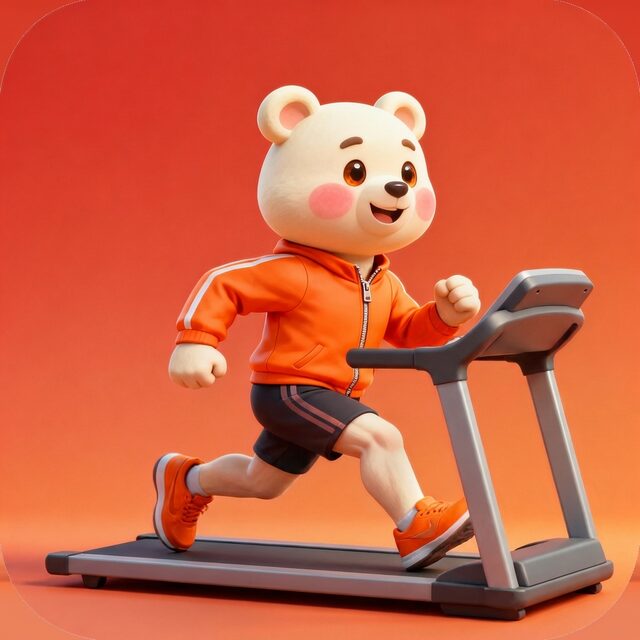 Treadmill walkWalk in any weather; incline adds effort
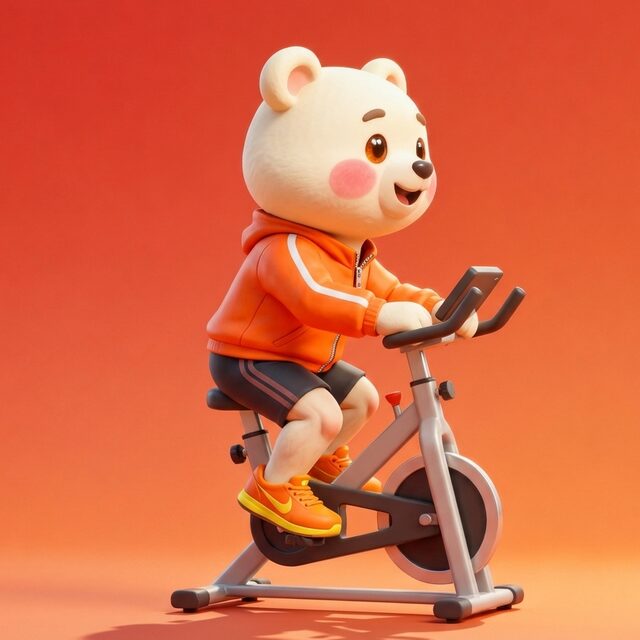 Stationary bikeLow impact and easy to do at home
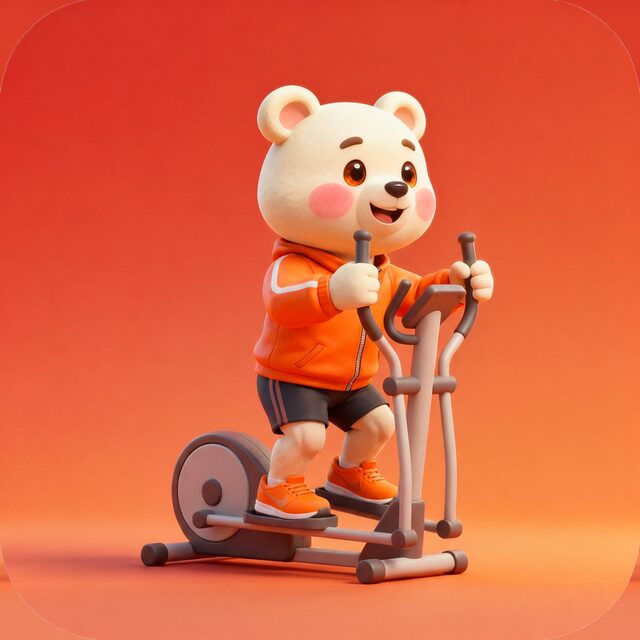 EllipticalRunning-like effort without the impact
 Running / joggingMost effort per minute; build up slowly
 Outdoor cyclingGentle on the joints, doubles as transport
 HikingWalking with hills, views and varied effort
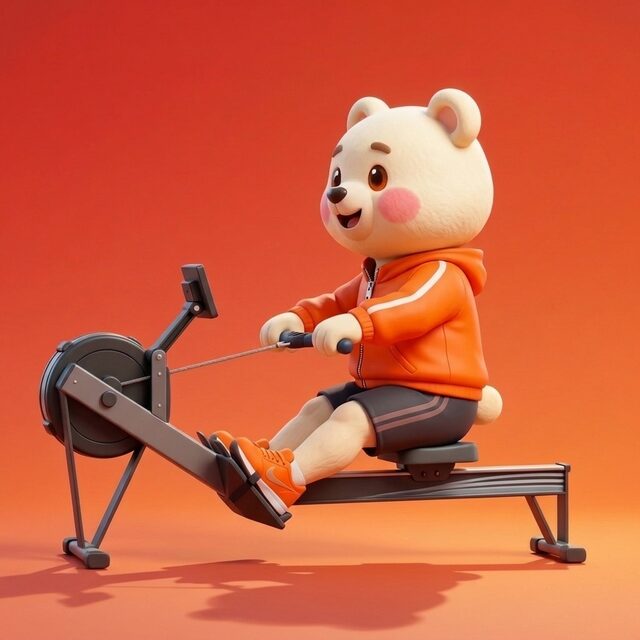 Rowing machineWhole body and low impact; technique matters
 Stair climberHard per minute; builds strong legs
 SwimmingWhole body; the water carries your weight
 Jump ropeVigorous in short rounds; high impact
 Dance / aerobicsFun, social and easy to do at home
The short version
- How much: adults should aim for 150 to 300 minutes of moderate cardio a week, or 75 to 150 minutes of vigorous cardio, according to the WHO. Any amount is better than none, and short bouts count.
- How hard: for most sessions, you should be able to talk but not sing. That is moderate effort.
- When: the best time is the one you can keep. Fasted cardio does not lead to more fat loss, and a short walk after meals helps lower blood sugar.
- What to drink: water is enough for most sessions under an hour. Sodium and electrolytes help in long, very sweaty sessions or in the heat. Mineral water is optional, not required.
- Which cardio: the one you enjoy and can keep doing. Walking, cycling, the elliptical and swimming are gentle on the joints; running, stairs and jump rope are harder per minute. Each option has its own guide above.
- Warm-up and cool-down: 5 to 10 minutes of easy movement at the start and at the end.
- Safety: build up slowly and keep rest days. Talk to a doctor first if you have heart, metabolic or kidney disease, are pregnant, or get chest pain, dizziness or unusual breathlessness with effort.
What heart rate should you aim for at your age?
Heart rate is a second check next to the talk test. The American Heart Association estimates maximum heart rate as 220 minus your age. Moderate effort is about 50 to 70 percent of that maximum, vigorous effort about 70 to 85 percent.
| Age | Estimated maximum | Moderate (50–70%) | Vigorous (70–85%) |
|---|---|---|---|
| 20 | 200 bpm | 100–140 bpm | 140–170 bpm |
| 30 | 190 bpm | 95–133 bpm | 133–162 bpm |
| 35 | 185 bpm | 93–130 bpm | 130–157 bpm |
| 40 | 180 bpm | 90–126 bpm | 126–153 bpm |
| 45 | 175 bpm | 88–123 bpm | 123–149 bpm |
| 50 | 170 bpm | 85–119 bpm | 119–145 bpm |
| 55 | 165 bpm | 83–116 bpm | 116–140 bpm |
| 60 | 160 bpm | 80–112 bpm | 112–136 bpm |
| 65 | 155 bpm | 78–109 bpm | 109–132 bpm |
| 70 | 150 bpm | 75–105 bpm | 105–128 bpm |
bpm means beats per minute. For ages in between, use the nearest row.
- Starting out: stay in the lower half of the moderate range for the first weeks. Most of your cardio can stay moderate for good.
- It is an average: real maximum heart rates differ by 10 beats or more either way, so the same row can feel too easy for one person and too hard for another. If the number and your breathing disagree, trust your breathing.
- A personal range: if you know your resting heart rate, the Karvonen method gives a range that fits you better.
- It depends on the cardio: heart rate tends to run lower in the pool and on a bike, and rises fast on a stair climber and with a jump rope. Each guide above says what to expect.
- Devices: wrist sensors can lag or misread during fast arm movements, on bumpy roads and in the water. A chest strap is more accurate.
- Medicines: beta blockers and some other medicines lower heart rate, so these ranges do not apply. Use the talk test and ask your doctor.
How do you get the most out of cardio?
- Keep it regular. Three to five sessions a week do more than one long session at the weekend, and they are easier on your joints.
- Build up slowly. Add a few minutes a week or one extra session, not both at once. Increase the time first, then the effort.
- Mostly moderate, some harder later. Once 30 minutes of moderate cardio feels easy, add a few short harder parts, such as 1 to 2 minutes faster and 2 minutes easy. The WHO counts one minute of vigorous activity as roughly two minutes of moderate.
- Add strength training twice a week. The WHO recommends muscle-strengthening activities on 2 or more days a week. Stronger legs and a stronger core make cardio easier.
- Move between sessions. Short walks after meals and breaks from long sitting add up over a week.
- Rest and sleep. Rest days let your body adapt. If you feel worn out, are sore for days, or your morning resting heart rate is clearly higher than usual, take an easy day.
- Choose what you enjoy. The best cardio is the one you are still doing in three months. Mixing two types also spreads the load on your body.
These guides are general information, not medical advice. Every figure is an estimate that varies between people.
More on the blog
How Hard Should Cardio Feel for Beginners?
Cardio should feel easy to moderate for beginners. You breathe faster but can still talk in full sentences, though you could not sing.
Walking vs Cycling vs Elliptical for Weight Loss
At moderate effort the bike and elliptical burn more per minute than walking, but the best choice for weight loss is the one you will keep doing.
How Much Cardio Do You Need to Lose Weight?
Guidelines suggest 150 to 300 minutes of moderate cardio a week, but the amount you need for weight loss depends mostly on how much you eat.