 Burnby
Elliptical Trainer: Who It Suits, How to Start and How Hard to Go
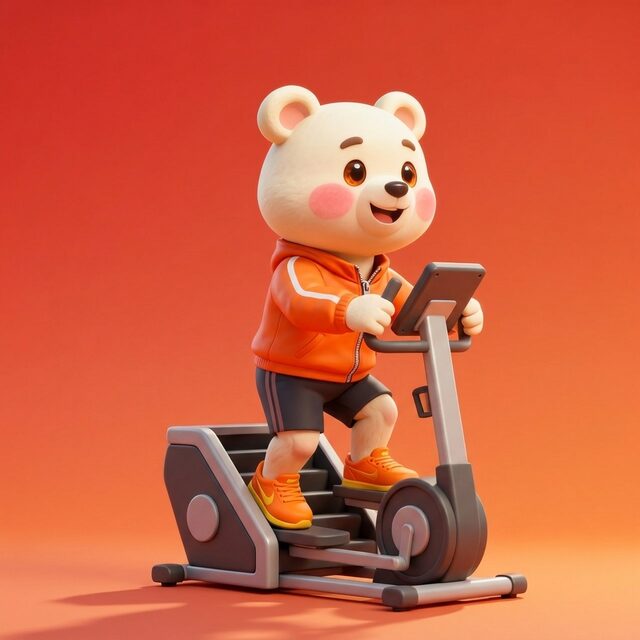
The elliptical suits people who want a running-like movement without the landing impact. Your feet stay on the pedals, and the moving handles bring in your arms. Start with 10 to 15 minutes at low resistance, then build up to 30 minutes at a moderate effort where you can talk but not sing. Thirty moderate minutes burn roughly 150 to 190 extra kcal for a 70 to 90 kg person.
Who is the elliptical a good fit for?
It is a good fit if running hurts your knees, shins or feet, if you carry extra weight, or if you want to work your arms and legs together. Because your feet never leave the pedals, there is no landing with each step. A lab study of elliptical exercise found smaller impact loading than in level walking, although the hips and knees bend more and the thigh muscles work harder.
It is less of a fit if you have trouble with balance, because the pedals move under you. Hold the fixed handles at first, or choose a recumbent bike. It also does not load your bones as much as walking or stair climbing.
How do you start in the first weeks?
| Week | What to do |
|---|---|
| 1 | 10–15 minutes at low resistance, 3–4 days |
| 2 | 15–20 minutes, a little more resistance in the middle |
| 3 | 20–30 minutes at moderate effort |
| 4 and later | 30 minutes or more; try a few minutes pedalling backwards or with a higher ramp, if your machine has one |
Begin each session with a few minutes of easy strides and end the same way. The first sessions often feel harder than expected, because the movement is new. That passes within a week or two.
How hard should the elliptical feel?
Use the talk test: you can talk in full sentences but could not sing. Raise the resistance until you feel your legs pushing, rather than letting the pedals spin you along.
Resistance levels and stride speeds are not the same from one machine to another. Go by your breathing.
What heart rate should you aim for on the elliptical?
Because arms and legs work together, the elliptical can raise your heart rate about as much as jogging, without the impact. A fast stride at low resistance lets momentum do the work and keeps your heart rate low. A steady pace at moderate resistance is the better way to reach the range. Pushing and pulling the moving handles raises it a little more.
| Age | Moderate | Vigorous |
|---|---|---|
| 20 | 100–140 bpm | 140–170 bpm |
| 30 | 95–133 bpm | 133–162 bpm |
| 40 | 90–126 bpm | 126–153 bpm |
| 50 | 85–119 bpm | 119–145 bpm |
| 60 | 80–112 bpm | 112–136 bpm |
| 70 | 75–105 bpm | 105–128 bpm |
The ranges use 220 minus age, as the American Heart Association does: moderate is about 50 to 70 percent of that maximum, vigorous about 70 to 85 percent. They are averages, and your own numbers can differ by 10 beats or more. If the number and your breathing disagree, trust your breathing. The cardio guide has the full table and when these ranges do not apply.
How many minutes on the elliptical balance a meal?
Burnby uses the elliptical trainer row of the 2024 Adult Compendium of Physical Activities (code 02048): 4.0 MET for a light effort and 5.0 MET for a moderate effort. It counts only the energy the session adds on top of what you would burn at rest anyway (net calories).
| Food and effort | 70 kg (154 lb) | 90 kg (198 lb) |
|---|---|---|
| 250 kcal snack, light | about 68 min | about 53 min |
| 250 kcal snack, moderate | about 51 min | about 40 min |
| 600 kcal meal, light | about 163 min | about 127 min |
| 600 kcal meal, moderate | about 122 min | about 95 min |
These are estimates, and Burnby shows a range around each number. Elliptical displays often show higher calorie numbers, because they count gross calories and may not know your weight. You do not have to burn off each meal: Burnby looks at your whole day and only the gap to your goal becomes minutes.
What do you need, and how do you stay safe?
- Shoes: supportive trainers with a firm sole.
- Getting on and off: hold the fixed handles and wait for the pedals to stop completely before stepping off.
- Posture: stand tall, look ahead, and keep your whole foot on the pedal.
- At home: keep children and pets clear of the moving arms and flywheel.
Stop and get medical help if you feel chest pain or pressure, dizziness, faintness or unusual shortness of breath.
What are common mistakes?
- Resistance too low. Without resistance the pedals carry you and the effort is much lower than it feels. Add enough to feel your legs push.
- Leaning on the handles. Resting your weight on your arms makes the session easier than the numbers assume.
- Up on your toes. It can make your feet go numb. Keep your heels down and press through the whole foot.
- Locked knees. Keep a soft bend in your knees throughout the stride.
How do you get more out of the elliptical?
- Keep the resistance up. Enough that you feel your legs pushing, so momentum does not do the work for you.
- Stand tall and hold on lightly. Leaning on the console takes weight off your legs and lowers the effort.
- Use your arms. Pushing and pulling the moving handles brings in the upper body.
- Mix in incline or pedalling backwards, if your machine allows it, to shift the work to different muscles.
- Add intervals once 30 minutes is comfortable: 1 to 2 minutes harder, then 2 minutes easy.
How does the elliptical fit with Burnby?
Log each session as elliptical. It uses more energy per minute than walking, so your daily minutes are shorter. You can get your own plan in a couple of minutes.
This article is general information, not medical advice. If you have heart, lung, joint, balance or metabolic problems, or are pregnant, talk to a doctor before you start.
FAQ
Is the elliptical better than walking?
Not better, but different. It uses a little more energy per minute than brisk walking and has less impact, but walking loads your bones more and needs no machine.
Should I use the moving handles?
Yes, if you can. Pushing and pulling brings in your arms and shoulders. Use the fixed handles when you need help with balance.
Is the elliptical good for bad knees?
It has less impact than running or walking, which many people with sore knees find easier. Keep the resistance moderate and stop if the pain gets worse.