 Burnby
Swimming for Exercise: Who It Suits, How to Start and How Long to Swim
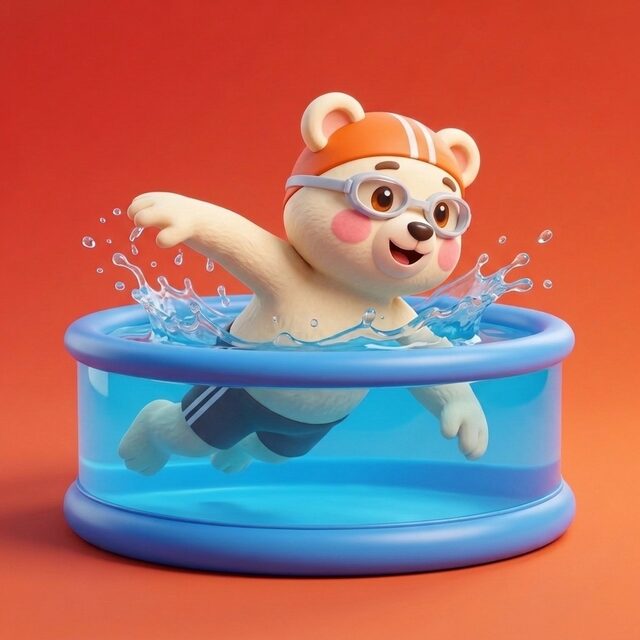
Swimming suits people who can already swim and want cardio that is gentle on the joints. The water carries your weight, and your arms, legs and trunk all work. Start with 15 to 20 minutes of easy lengths with rests between them, then build up to 30 minutes of steady swimming. Thirty minutes of relaxed lap swimming burns roughly 175 to 225 extra kcal for a 70 to 90 kg person.
Who is swimming a good fit for?
It is a good fit if you have sore joints, carry extra weight, are recovering fitness, or simply enjoy the water. In a 2016 trial in people with osteoarthritis, 12 weeks of swimming reduced joint pain and stiffness and improved function as much as cycling did. If you do not swim lengths, water walking and aqua aerobics are other gentle options in the water.
It is less of a fit if you are not a confident swimmer. Learn with an instructor first; it is never too late. The CDC estimates that about 40 million US adults cannot swim. Swimming also loads the bones less than walking, so add some walking or strength work during the week if you can.
How do you start swimming in the first weeks?
| Week | What to do |
|---|---|
| 1 | 15–20 minutes in total: 1 length, rest 30–60 seconds, repeat, 2–3 days |
| 2 | 20 minutes: 2 lengths, then rest |
| 3 | 20–30 minutes: 3–4 lengths, then a short rest |
| 4 and later | 30 minutes or more with fewer, shorter rests |
Resting at the wall is normal and part of the session. Mixing strokes, such as breaststroke and front crawl, gives your shoulders a break.
How hard should swimming feel?
Swim at an effort where you could say a short sentence at the wall without gasping. That is the swimming version of the talk test. If you need a long rest after every length, slow down.
Technique changes the effort a lot. A beginner can find one length of front crawl harder than a skilled swimmer finds ten. That is normal and improves with practice.
What heart rate should you aim for in the pool?
In the water, heart rate is usually lower than on land at the same effort, often by about 10 beats a minute. Lying flat, the cooling water and having your face in the water all play a part. So take about 10 beats off the ranges below. Wrist watches can misread in the pool; the talk test at the wall is often the more reliable guide.
| Age | Moderate | Vigorous |
|---|---|---|
| 20 | 100–140 bpm | 140–170 bpm |
| 30 | 95–133 bpm | 133–162 bpm |
| 40 | 90–126 bpm | 126–153 bpm |
| 50 | 85–119 bpm | 119–145 bpm |
| 60 | 80–112 bpm | 112–136 bpm |
| 70 | 75–105 bpm | 105–128 bpm |
The ranges use 220 minus age, as the American Heart Association does: moderate is about 50 to 70 percent of that maximum, vigorous about 70 to 85 percent. They are averages, and your own numbers can differ by 10 beats or more. If the number and your breathing disagree, trust your breathing. The cardio guide has the full table and when these ranges do not apply.
How many minutes of swimming balance a meal?
Burnby uses the 2024 Adult Compendium of Physical Activities: 5.3 MET for recreational breaststroke (code 18265) and 5.8 MET for slow, recreational front crawl lengths (code 18240). It counts only the energy on top of what you would burn at rest anyway (net calories).
| Food and stroke | 70 kg (154 lb) | 90 kg (198 lb) |
|---|---|---|
| 250 kcal snack, breaststroke | about 47 min | about 37 min |
| 250 kcal snack, slow crawl | about 43 min | about 33 min |
| 600 kcal meal, breaststroke | about 114 min | about 89 min |
| 600 kcal meal, slow crawl | about 102 min | about 79 min |
These are estimates, and swimming varies more than most activities, with stroke, skill and how long you rest. Burnby shows a range around each number. You do not have to swim off each meal: Burnby looks at your whole day and only the gap to your goal becomes minutes.
What do you need, and how do you stay safe?
- Where: a pool with a lifeguard is the safest place to start. Open water is colder and harder to judge; swim there only with others and where it is allowed.
- Gear: a swimsuit, goggles and, if you like, a cap. A kickboard or pull buoy helps while you learn.
- Water: you sweat in the pool too. Drink before and after.
- Never swim alone, and do not swim after alcohol.
Stop and get out if you feel chest pain or pressure, dizziness, faintness or unusual shortness of breath, and ask for help.
What are common mistakes?
- Holding your breath. Breathe out steadily into the water, then breathe in when you turn your head or lift it.
- Swimming too fast at the start. Sprinting the first length leaves you breathless for the rest. Start slow.
- Head held high in front crawl. It makes your legs sink. Look down at the pool floor.
- Only one stroke for every session. Variety eases the load on your shoulders and neck.
How do you get more out of swimming?
- Take a few lessons. Better technique makes every length easier, so you can swim for longer. Adults improve quickly too.
- Swim in sets with rest at the wall. Swim a few lengths, rest 20 to 30 seconds, repeat. Shorten the rests as you get fitter.
- Use a kickboard and a pull buoy. They train legs and arms separately and give tired shoulders a break.
- Mix strokes. Switching between front crawl, backstroke and breaststroke spreads the load on your shoulders and keeps sessions interesting.
- Count lengths or time. Swimming the same distance with fewer breaks is a clear sign of progress.
How does swimming fit with Burnby?
Log each session as swimming, short rests at the wall included. You can get your own plan in a couple of minutes.
This article is general information, not medical advice. If you have heart, lung, joint or metabolic problems, epilepsy, are pregnant, or are unsure whether swimming is right for you, talk to a doctor first.
FAQ
Is swimming good for losing weight?
It uses a good amount of energy without stressing the joints, and it fits into Burnby like any other cardio. Weight change depends on the whole day, including what you eat.
Do rests at the wall count?
Short rests are part of a normal recreational swim, so log the whole session. If you stop for long stretches, log only the time you were moving.
What if I cannot swim well?
Take lessons, or try water walking or aqua aerobics in the shallow end. Both are gentle, joint-friendly cardio.